When considering a rare cask of single malt, you are not merely purchasing a spirit; you are acquiring a piece of heritage. Yet, how do you distinguish a truly exceptional opportunity from one lost in a sea of overproduction? The answer lies in understanding a distillery’s cask stock-the total volume and profile of its maturing inventory. This single, often opaque, metric can be the difference between a prudent investment and a costly misstep, leaving many aspiring collectors feeling uncertain and ill-equipped to judge the true provenance of an offer.
This exclusive guide is designed to lift the veil on this crucial concept. We will provide the framework to confidently assess a distillery’s inventory profile, understand the delicate balance of age and availability that creates genuine rarity, and ultimately, evaluate the long-term potential of your tangible assets. You will move from uncertainty to authority, empowered to navigate the market with the quiet confidence of a seasoned connoisseur and build a legacy based on knowledge, not speculation.
Uncorking the Term: What ‘Cask Stock’ Means in Whisky Investment
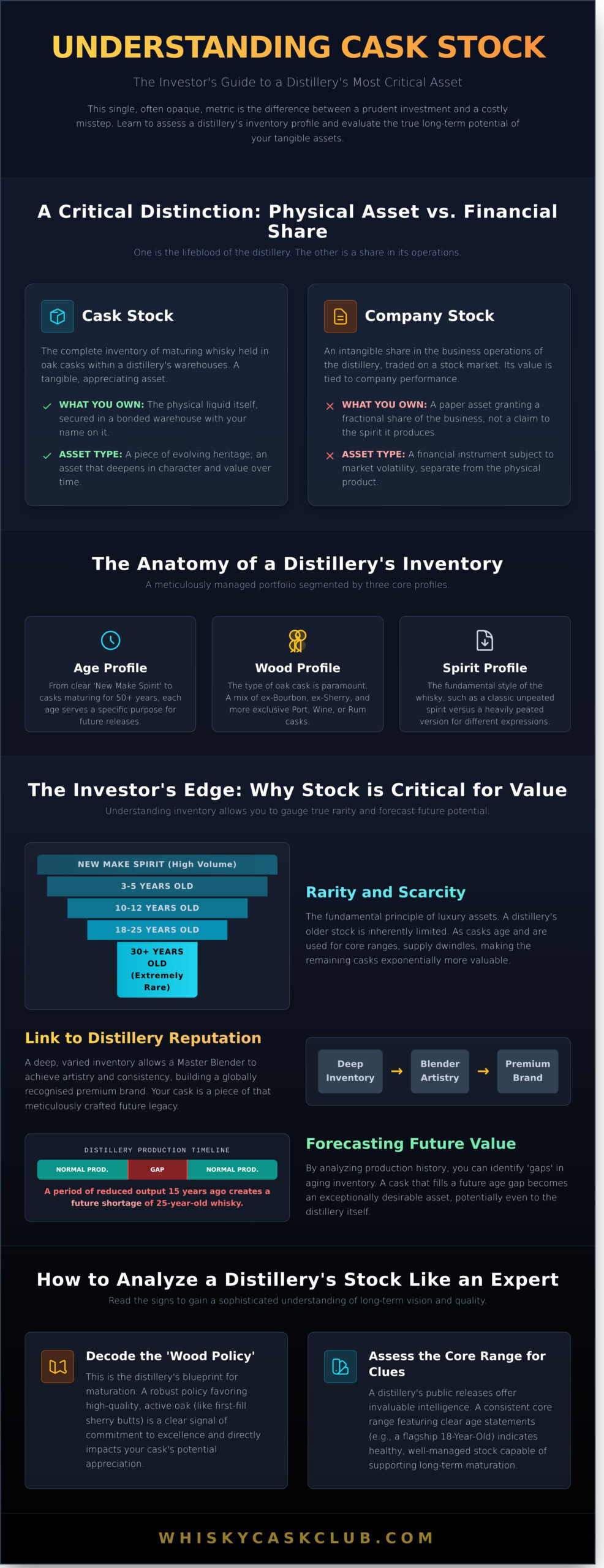
In the world of premium investments, the term ‘cask stock’ often causes initial confusion. Let’s be unequivocal: it has no relation to a company’s shares on the stock market. Instead, cask stock refers to the complete inventory of maturing whisky held in oak casks within a distillery’s warehouses. This is not a paper asset; it is the lifeblood of the distillery, a tangible collection of its past craftsmanship and its entire future potential. Each cask represents a developing asset, slowly gaining complexity and value over years, even decades.
Cask Stock vs. Company Stock: Clarifying the Critical Distinction
A common misconception, partly fueled by a now-defunct stock market ticker, is that this term refers to company shares. The reality is far more compelling for the discerning investor. When you invest in cask stock, you are purchasing the physical liquid itself-a tangible asset with your name on it, secured in a bonded warehouse. In stark contrast, owning company stock grants you an intangible share in the business operations, not a claim to the precious spirit it produces.
The Anatomy of a Distillery’s Cask Stock
A distillery’s inventory is a meticulously managed portfolio, a liquid library diverse in character, provenance, and potential. Understanding its composition is key to appreciating its value. The inventory is typically segmented by three core profiles:
- Age Profile: This ranges from ‘new make spirit’-the clear, unaged alcohol fresh from the still-to casks that have been maturing for 3, 5, 10, 20, or even 50+ years. Each age bracket serves a different purpose, from future core releases to exceptionally rare single-cask bottlings.
- Wood Profile: The type of oak cask is paramount to flavour development. A distillery’s stock will include a variety of wood types, most commonly ex-bourbon barrels from America and ex-sherry butts from Spain, alongside more exclusive port, wine, or rum casks.
- Spirit Profile: This details the fundamental style of the whisky. For example, a distillery might produce both a classic unpeated spirit and a heavily peated version for different expressions. Understanding the core differences of What is Scotch Whisky? provides essential context for this diversity.
This maturing inventory is fundamentally different from a distillery’s finished, bottled product. While a bottle represents the final, static chapter of a whisky’s story, a cask represents the living narrative. It is an asset that is constantly evolving, appreciating, and deepening in character-the very foundation upon which a whisky legacy is built.
The Investor’s Edge: Why Cask Stock Is a Critical Metric for Value
For the discerning investor, a distillery is more than a name; it is a repository of future value. The entire collection of maturing whisky, known as its cask stock, is the single most important indicator of a distillery’s future. This inventory is the raw material from which reputation is built and legendary expressions are born. It dictates the ability to release consistent 12, 18, or 25-year-old whiskies that command premium prices. Understanding this inventory allows you to gauge the true rarity and potential of the cask you are offered.
Rarity and Scarcity: The Economics of Cask Supply
The fundamental principle of any luxury asset is scarcity. A cask from a distillery with limited older stock is inherently rarer and, therefore, more valuable. Distilleries must first service the needs of their own core range and special editions, meaning the casks made available to private investors are carefully selected. A low supply of certain vintages or rare wood maturations creates a powerful dynamic for immense future growth in value.
The Link Between Cask Stock and Distillery Reputation
A deep and varied inventory allows a master blender to achieve artistry and consistency, building a globally recognised premium brand. This long-term strategy is underpinned by meticulous inventory management and secure aging in dedicated facilities, all governed by strict HMRC regulations for bonded warehouses, which ensures the provenance and integrity of your asset. Investing in a cask from such a distillery means you are buying a piece of that meticulously crafted future legacy.
Forecasting Future Value Through Age Profiles
Sophisticated investors look beyond the present to forecast future market dynamics. By analysing a distillery’s production history, one can identify potential ‘gaps’ in its aging inventory. For example, a period of reduced output 15 years ago will create a shortage of 25-year-old whisky a decade from now. A cask that perfectly fills this future age gap becomes an exceptionally desirable asset not just to independent bottlers, but potentially to the distillery itself. This foresight is the key to strategic acquisition and superior returns.
How to Analyze a Distillery’s Cask Stock Like an Expert
While distilleries guard the specifics of their maturing inventory as a closely held secret, a discerning investor can learn to read the signs. Understanding a distillery’s strategy and the health of its cask stock is fundamental to selecting an asset with outstanding potential for growth. It is a blend of art and science, requiring a deep appreciation for the craft and a pragmatic eye for value.
By focusing on key indicators, you can gain a sophisticated understanding of a distillery’s long-term vision and the quality of the spirit it is laying down for the future.
Decoding a Distillery’s Wood Policy
A distillery’s ‘wood policy’ is its strategic blueprint for maturation-the very soul of its flavour profile. This philosophy dictates the types of casks sourced, from premium first-fill sherry butts to seasoned bourbon barrels. A robust policy favouring high-quality, active oak is a clear signal of a commitment to craftsmanship and excellence, directly influencing the complexity, character, and ultimate financial appreciation of the spirit maturing within your own cask.
Assessing the Core Range for Clues
The bottles a distillery releases to the public offer invaluable intelligence. A consistent core range featuring expressions with clear age statements, such as a flagship 18-year-old, indicates a healthy, well-managed inventory and long-term planning. Conversely, a sudden shift to ‘No Age Statement’ (NAS) whiskies can sometimes suggest that a distillery’s maturing stocks are under pressure, forcing them to use younger spirit than they might prefer.
The Challenge: Transparency and the Need for a Broker
The primary challenge for any private investor is access to information. Distilleries do not publish detailed reports on their maturing assets. This intelligence is gathered through decades of industry experience, established relationships, and meticulous market analysis. This is precisely why discerning investors partner with a specialist broker. We provide the essential due diligence and expert guidance needed to navigate this opaque market, ensuring you are building your legacy on a foundation of knowledge. Explore our curated cask selections to see this expertise in action.
Accessing the Legacy: How We Curate Our Exclusive Cask Stock
The world’s most revered distilleries are masters of their craft, focused on producing and bottling exceptional whisky, not selling individual casks to the public. However, for strategic reasons-such as managing cash flow or funding future production-they release a small, exclusive fraction of their maturing inventory. This creates a highly sought-after market that is inaccessible without deep industry connections.
As specialist brokers, we leverage our long-standing relationships with Scotland’s finest distilleries to act as the crucial bridge between their warehouses and discerning private investors. Our role is to perform the rigorous due diligence required, gaining privileged access to this rare inventory and curating a selection of only the most promising assets for our clients.
The Art of Curation: Selecting Casks with Provenance
Our access is merely the starting point; our true value lies in meticulous curation. We conduct extensive analysis of a distillery’s reputation, the health of its existing inventory, and the specific character of its new-make spirit. We then hand-select individual casks with exceptional provenance and maturation potential, ensuring each one aligns with our clients’ ambitions for legacy and growth. This expert curation saves you invaluable time and mitigates the risk of acquiring an underperforming asset.
Beyond the Purchase: Full-Service Cask Management
Acquiring a premium cask is only the first step in a multi-year journey. We provide a seamless, full-service management experience to protect and enhance your tangible asset. Our comprehensive service includes:
- Secure Storage: Your cask is stored under your own name in a government-regulated, fully insured bonded warehouse in Scotland.
- Expert Oversight: We provide regular updates and expert analysis on your cask’s maturation progress.
- Strategic Guidance: Our team advises on identifying the optimal exit strategy, whether you choose to bottle, sell, or hold for further appreciation.
Build Your Portfolio with Confidence
A clear understanding of the cask stock market empowers you to invest with conviction. By partnering with the Whisky Cask Club, you gain more than just an asset; you gain the full benefit of our industry expertise, exclusive access, and dedicated management. Begin your journey into this rewarding alternative asset class with a trusted advisor by your side.
Request a consultation to discuss our current cask stock availability.
Securing Your Legacy Through Cask Ownership
Understanding the nuances of a distillery’s cask stock elevates you from a mere enthusiast to a strategic investor. As this guide has shown, analyzing this inventory of maturing spirit is not just an academic exercise; it is the most reliable way to gauge a distillery’s future potential and the true rarity of its offerings. This knowledge empowers you to look beyond the label and identify tangible assets with genuine, long-term value.
Transforming this insight into a tangible investment, however, requires privileged access and trusted guidance. At Whisky Cask Club, we bridge that gap. We provide our members with exclusive access to rare and premium distillery stock, meticulously curated for its provenance and potential. Your investment is supported by our expert portfolio management and exit strategy advice, and safeguarded within secure, fully insured Scottish bonded warehouses from the moment of acquisition.
Begin building your legacy. Explore our curated cask selection.
The journey to creating a lasting inheritance begins with a single, well-chosen cask.
Frequently Asked Questions
How is the total value of a distillery’s cask stock calculated?
Calculating the value of a distillery’s entire cask inventory is a highly detailed financial exercise. It goes far beyond simple volume, factoring in the age of the spirit, the cask type (e.g., sherry, bourbon), the original distillery’s prestige, and current market demand for its profile. This valuation is a critical component of a distillery’s balance sheet, representing a tangible asset and the foundation of its future legacy and revenue streams.
Does a larger cask stock automatically mean the whisky is less valuable or rare?
Not at all. A substantial cask stock often signifies a distillery’s strength, heritage, and commitment to long-term maturation. Rarity is determined by specific factors within that stock, such as age statements, unique cask finishes, or single-cask expressions. A large, well-managed inventory from a premium distillery is a mark of quality, ensuring a future supply of exceptional and highly sought-after whiskies for discerning collectors and investors.
Can private investors buy cask stock directly from famous distilleries?
Direct acquisition from iconic distilleries is exceptionally rare for private individuals. These producers typically reserve their maturing stock for their own official bottlings to protect their brand’s legacy and quality control. This is where Whisky Cask Club provides exclusive access. We leverage our industry relationships to source and curate premium casks that are otherwise inaccessible, offering a direct path to ownership for our discerning members.
What is a ‘first-fill’ versus a ‘refill’ cask and how does it relate to stock quality?
A ‘first-fill’ cask is one being used for the first time to mature Scotch whisky, imparting potent flavours from its previous contents like sherry or bourbon. A ‘refill’ cask has been used before, offering a more subtle influence that allows the spirit’s own character to develop elegantly over time. Both are vital to creating a diverse, high-quality portfolio, with the choice reflecting the desired style and maturation journey for the liquid asset.
How does Whisky Cask Club verify the provenance and ownership of its cask stock?
Our verification process is meticulous and absolute. We secure a complete chain of custody for every cask, including original documentation and Delivery Orders. Ownership is legally established and recorded at the HMRC-regulated bonded warehouse where the cask is stored. This unwavering commitment to due diligence ensures every asset has unimpeachable provenance, providing our members with complete confidence and security in their investment.
What happens to a distillery’s cask stock if the company is sold?
A distillery’s maturing cask stock is arguably its most valuable tangible asset. In the event of an acquisition, this entire inventory is a critical part of the sale, with its valuation heavily influencing the final purchase price. The new owners assume stewardship of this liquid legacy, inheriting both the asset itself and the responsibility to manage its journey towards becoming a premium, mature whisky in line with the distillery’s heritage.