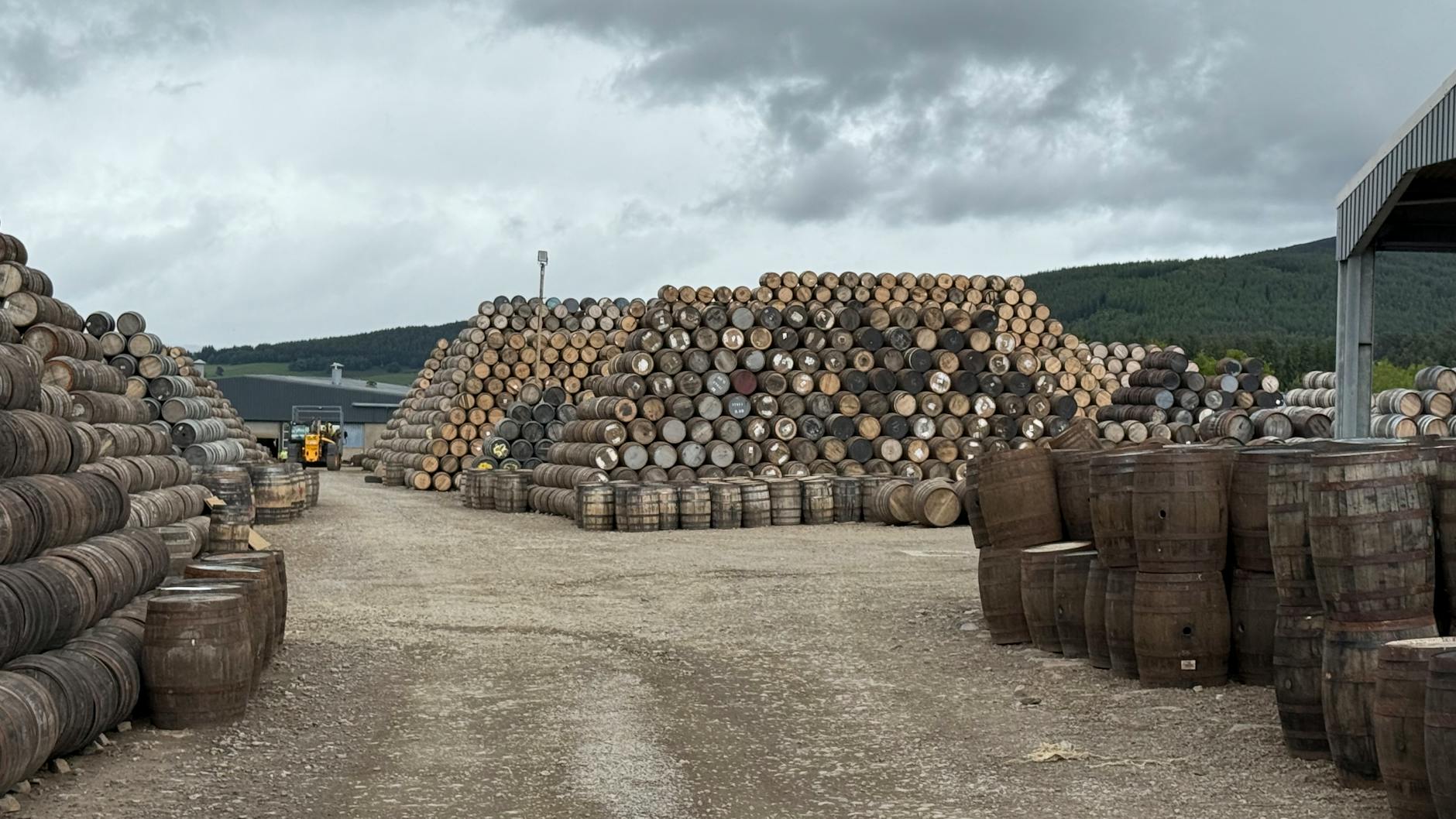
Springbank is a fiercely independent, family-owned Campbeltown distillery producing three distinct single malts. Its total vertical integration, limited output, and allocation-only model create scarcity, fueling strong collector and secondary market interest.
The News
Springbank remains one of the most fiercely independent and commercially fascinating distilleries in Scotch whisky, and its position in the secondary market continues to strengthen. Owned and operated by J. & A. Mitchell & Co., the Campbeltown distillery has never changed hands, never been mothballed for corporate restructuring, and never chased volume at the expense of character. In an industry increasingly dominated by multinational drinks groups, Springbank's family-owned model and vertically integrated production make it an outlier — and that scarcity factor is now driving serious interest from collectors and cask investors alike. Here are seven things the trade should understand about one of Scotland's most storied operations.
1. Campbeltown's Last Standing Legacy
Springbank was founded in 1828, just five years after the Excise Act brought a wave of legal distilling to Scotland. Campbeltown, a small town on the Kintyre peninsula, once hosted more than thirty distilleries and was considered the whisky capital of the world. Overproduction, poor quality control, and Prohibition-era export losses gutted the region, and by the mid-twentieth century only Springbank and Glen Scotia survived. Springbank's endurance through that collapse was not accidental — the Mitchell family maintained tight control over output and refused to cut corners during lean decades. That heritage now underpins its authenticity credentials in a market where provenance commands premiums.
2. Three Distillery Characters Under One Roof
Few distilleries anywhere in the world produce three distinct single malts from the same site. Springbank itself is distilled two and a half times, giving it a medium-bodied, oily character with maritime influence. Longrow, introduced in 1973, is double-distilled and heavily peated, offering a smokier profile that appeals to Islay enthusiasts looking for something different. Hazelburn, first distilled in 1997, is triple-distilled and unpeated, producing a lighter, fruitier spirit. This three-brand strategy from a single pair of stills gives the distillery unusual flexibility in the market without requiring capital expenditure on additional production facilities.
3. Total Vertical Integration
Springbank is the only distillery in Scotland that carries out every stage of production on site — from malting barley on its own traditional floor maltings, through mashing, fermentation, distillation, maturation, and bottling. The in-house bottling hall, operated under the Cadenhead's and Springbank labels, means the distillery controls quality from grain to glass. This level of integration is virtually unheard of in modern Scotch production, where most distilleries outsource malting to large commercial maltsters and send filled casks to centralised bottling plants. For the trade, this matters because it eliminates supply chain variables and reinforces the distillery's narrative of craft authenticity — a narrative that increasingly translates into auction value.
Trade Context
- Producer / Distillery: Springbank, J. & A. Mitchell & Co., Campbeltown
- Category: Scotch Single Malt (Campbeltown)
- Annual Output: Approximately 750,000 litres of pure alcohol across all three brands
- Market implication: Limited production, no third-party distribution of casks, and growing secondary market demand create persistent supply constraints
4. Allocation-Only Distribution
Springbank operates on a strict allocation model for retail and trade customers. There is no open wholesale channel — retailers must apply and maintain a relationship with the distillery to receive stock. Annual releases such as the Springbank Local Barley series and aged Longrow expressions regularly sell out within hours. This controlled distribution model keeps retail prices relatively accessible compared to secondary values, but it also means the distillery captures less margin than it theoretically could. For collectors and cask holders, the allocation system effectively guarantees scarcity and supports long-term value retention in a way that open-market distribution does not.
5. Secondary Market Performance
Auction data from platforms including Whisky Auctioneer and Scotch Whisky Auctions shows Springbank bottles consistently outperforming comparable aged Scotch from larger producers. The Springbank 21 Year Old, for instance, routinely fetches multiples of its original retail price, while older Local Barley releases have appreciated sharply since their initial launch. Cask sales remain tightly controlled — the distillery rarely, if ever, releases casks to the open market — which makes legitimate Springbank cask ownership exceptionally rare and correspondingly valuable in private transactions.
Why It Matters
Springbank's significance to the whisky trade extends beyond nostalgia. Its production model demonstrates that independence, vertical integration, and deliberate supply restriction can generate outsized brand equity without corporate marketing spend. As consolidation continues across the Scotch industry, Springbank stands as proof that smaller-scale operations can thrive commercially while maintaining production integrity. For serious trade participants and cask investors, understanding Springbank's operating model is essential — not because it can be replicated easily, but because it sets a benchmark against which other independent distilleries will increasingly be measured. The distillery's refusal to expand recklessly or sell out ensures that demand will continue to outstrip supply for the foreseeable future, making Springbank one of the most structurally supported names in the collectible whisky market.
Frequently Asked Questions
What makes Springbank Distillery so unique?
Springbank is the only distillery in Scotland that performs every stage of whisky production on-site, from malting its own barley to bottling, and it produces three distinct single malt brands under one roof.
What are the three whiskies produced at Springbank?
The distillery produces Springbank (medium-bodied, lightly peated), Longrow (heavily peated, double-distilled), and Hazelburn (unpeated, triple-distilled) single malts.
Why is Springbank whisky so hard to find?
Due to its small annual production and a strict allocation model for distributors and retailers, bottles are limited and often sell out quickly, creating high demand in the secondary market.
What is the history of Springbank and Campbeltown?
Founded in 1828, Springbank is one of the last surviving distilleries from Campbeltown, a region that was once home to over 30 distilleries and considered the whisky capital of the world.